
Tariro

5 Reasons Why I Picked A Career In Tech

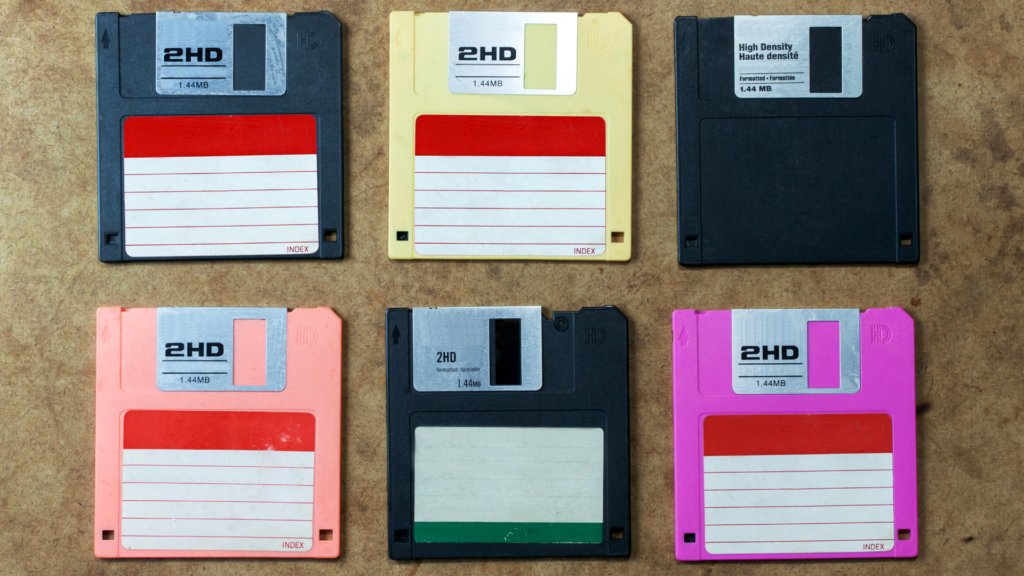
Growing up, I wanted to be a… Play the African drumroll… Doctor! Of course! That’s what my dad (and mum I think) wanted me to be, and going against the wishes of African parents was simply not an option. I genuinely enjoyed studying Maths, Biology, and Chemistry at the start of my O-levels, so it felt like a no-brainer to carry on with these subjects at A-level. This was my clear path to studying medicine and eventually becoming a dermatologist. But then, life had other plans. I had to transfer to another school mid-O-level, and the new setup split classes into Arts and Commercials, or Sciences and Commercials. Unfortunately, the Sciences class was full, and I’d have to join the Arts class. I really didn’t care – I was more excited about starting at a new school. However, my dad wasn’t happy. He asked the school head, “Can’t you just take a desk from the other class and place it in the Sciences class? Because ini mwana wangu akuda kuita doctor” (Translation: Because my child wants to be a doctor). The school didn’t budge. My dad, clearly disappointed, asked if I could manage Arts and what I’d consider as a career instead. Without giving it much thought, I blurted out, “I’ll be a lawyer.” His silence said it all – likely even internally rolled his eyes. He probably knew, deep down, that I wasn’t cut out for Law. What was I even thinking? 😂 Fast-forward nearly two years later, and it was time to decide which subjects to study at A-level. My dad called me to ask what I’d chosen, his tone almost carrying the unspoken “But these won’t make you a doctor, though, will they?” vibes. When I confidently said I wanted to study Computer Science, he was (kind of) stunned. He asked if I was sure. I was. And that’s how I officially began my journey into the world of computers, eventually studying Computer Science at university. The rest? Well, that’s a story still being written. Here’s why I chose this path: 1. My Dad’s Laptop When we were kids, my dad sometimes brought home his work laptop. It ran WordPerfect and Lotus 1-2-3, and we passed commands on it through the DOS prompt. I know this probably sounds so ancient and giving away my age but, at the time, navigating these felt like magic! We fought over it so much that we had to take turns. Most of our one-hour turn-taking slots were spent exploring these same apps, randomly pressing keys, and issuing commands that did absolutely nothing – but it was still exciting. I was obsessed with figuring out how to “talk” to that machine, even though I didn’t fully understand how it worked and my dad could only teach me so much. And he did teach me a fair amount of things to be honest – especially as I got older – spreadsheets & documents in particular. 2. Miss Indechi, Miss Kubi & Mr Nyamukachi In primary school, our first computer teachers, Miss Indechi and Miss Kubi, were my heroes! My first tech superstars that looked like me. They introduced us to monitors, CPUs, keyboards, and floppy disks. I adored them and wanted to be like them – confident, knowledgeable, and sophisticated in all things computers. Then came Mr Nyamukachi, my A-level Computing teacher, who remains my all-time favourite educator. He made learning about computers exciting, challenged me without making me feel inadequate, and inspired me to use tech to solve real-world problems. His influence even sparked my love for mentoring and coaching others such that to this day, whenever I have to step into a role I have to teach, he often comes to mind. 3. Bill Gates During my childhood, teenage years, and early 20s, Bill Gates was the world’s richest man. Seeing tech dominate global wealth conversations in the early 2000s and then those brave enough to innovate reap financial rewards and recognition, was inspiring. I mean, who doesn’t want to build some wealth? While I didn’t realistically imagine myself in Silicon Valley (yet), the idea of building a stable, well-paying career through tech was deeply appealing. 4. Hollywood’s Portrayal of Silicon Valley I’ve grown to not be a TV person but when I do make time, I’m a sucker for geeky movies and series about startups and Silicon Valley. Such shows fuel my imagination, and experiencing Silicon Valley remains the only long-standing item on my bucket list. It’s been there since way before I ever had a passport. While I’ve never pictured myself in a courtroom as a lawyer or a consultation room as a dermatologist, I’ve definitely held close a vision of me working in Silicon Valley. 5. Desire to Solve Problems If you scroll through the notes app on my phone or laptop, you’ll find scattered ideas for solving everyday problems. Many are quite odd and probably silly, but some are practical. I love seeing how technology can be applied to make life easier, and even when I’m not building these solutions, watching others innovate to address my problems really lights me up. That said, choosing a career in tech wasn’t something I had to agonise over. At some point, it seemed like a natural fit for my curiosity, interests, and desire to make an impact. While my journey to thinking seriously about my career started with a little twist of fate, it’s shaped who I am today. By pursuing a career in tech, I’ve learned how it offers endless opportunities to innovate, solve real-life problems, and positively impact communities. I know my story isn’t unique. Many people have taken different, sometimes surprising, paths into tech. Some stumbled into it by chance, like my university friend who ended up thriving in a programme he took as a default option. Others, like me, had an early spark of fascination that grew into a passion. What’s your tech story? Did you always know this was your path, or did you

5 Reasons Why I Picked A Career In Tech Read More »

Why I Abandoned the 100 Days of Code Python Challenge

The other day I called my friend to catch up and somewhere in between our conversation she said one word, “Python”, that plunged us both in some fit of laughter. Why were we laughing? Well, because about 2 years ago we both (individually) embarked on journeys to learn Python – the programming language. However, for varied reasons, we didn’t really get far with it. Let me speak on my own. So around November 2022 I decided I wanted to start learning Python and I enrolled for the famous 100 Days to Code Python Bootcamp by Dr. Angela Yu. Out of excitement, I also decided I wanted to share my learning journey publicly so I used to post reels on my Instagram speaking on the different challenges I was working on. My friends and colleagues were incredibly encouraging and it made me want to show up even more. Initially, I did show up – for the first few days of the course. Then I started to lose interest and became less engaged. The challenges started getting a bit harder for me to complete in a day because this is something I would only dedicate about an hour or two in my day. After more than 100 days since starting the challenge, I remember recording my Day 10 video🤦🏽‍♀️. I was watching the video the other day and in it I actually said that at the rate I was going, this challenge was going to take me 5 years to complete! View this post on Instagram A post shared by Tariro | Remote Work, Tech & Life (@iamtariromakina) And that was the last video I did. I stopped my learning at Day 14. I didn’t even make it out of the Beginner’s class, even though I was almost there! So what happened? You might be wondering: Did I even want to learn coding in Python in the first place? I did. I have always loved programming – SQL being the only language I can “speak & write” fluently 😉 . However, I never chose to pursue software development as a career for many personal reasons. One of them being, I tend to get so immersed. I was scared of one day forgetting to feed my children or pick them up from school because I was trying to debug something. I mean, I had seen myself in action before. I took debug issues so seriously to the point where I would wake up in the middle of the night to fix code because a solution would have come to me in my sleep. But, this is decades later. I thought I was ready. Was I though? I did some self introspection over the past few months around this and realised that I wasn’t ready but, this time, it had absolutely nothing to do with my initial fears. My motivation around taking the 100 Day Challenge wasn’t really purely to just learn the language. There was something else I was looking for. At the time when I decided to start this challenge, I was an emotional wreck. I had just lost my dad and life was generally showing me flames. I wanted something to go right. I was desperate for a win and, to be honest, I thought me taking up this challenge would give me that feeling of conquering and winning against adverse life situations. Remember I mentioned I was also sharing this journey publicly. I got to a point where my only motivation was when someone asked me, “What day are you on?” I would think, let me do another day’s challenge so that they can see how I am so enthusiastic with this – yet somewhere along the way, I had honestly lost all zeal for it and struggling to move forward. As much as I desired to learn coding in Python, at this particular point in my life, I stopped wanting to do it for myself and for my personal development. I wanted to do it for external validation, so that people would pat me on the back and say, Oh you are doing amazing! I was sick of feeling like I was losing in life and wanted to hear someone or some people tell me how well I was doing. Unfortunately, for me, that failed to sustain my learning journey and I soon fell off that wagon. Because I wanted to win so bad, I ended up feeling like it was now an impossible milestone to reach. I was too focused on the “prize” that I had made up in my head and not the learning experience itself. In the end, I felt defeated as I thought there was no way I was going to be able to master this skill and become a pro – not in a hundred days and not ever. I was pretty much done. It didn’t matter how much I loved the idea of coding. My life circumstances and mindset at the time completely clouded my approach to learning. That said, the 100 Days of Code Python Bootcamp is an incredible course and excellent value for money. I got mine for just $12, and I have lifetime access! The challenges were engaging, and the content was solid. My lack of progress had nothing to do with the course. It was all about how I approached it. Fast forward to today, and I’ve decided to give it another shot. This time, I’m taking a completely different approach. So, What’s Different Now? Will I Share My Journey This Time? Yes, but differently. I’ll post updates occasionally, particularly when I hit milestones like moving from Beginner to Intermediate to Advanced to Pro. I’ve learned not to let public validation dictate my pace or progress. This time, it’s all about investing in myself and celebrating genuine growth. Looking back, I realise how much I let self-inflicted pressures and personal struggles derail me. I’ve learned my lesson: never take on a challenge just for the bragging rights. It’s

Why I Abandoned the 100 Days of Code Python Challenge Read More »

How I Recently Discovered My Father’s (Massive) Wealth

Recently I was listening to an audiobook, Killing Comparison by Nona Jones and also listening to some excerpts from her most recent one, The Gift of Rejection. Both inspired me to write this post and I highly recommend them to anyone who is struggling to find their place in a world that is constantly pressuring us to place value in external approval (maLove nemaLikes 😉) and not necessarily making a genuine positive impact in this world. I have always been one to think that I am very lucky when I get an opportunity, regardless of how big or small it is. Whether it was being invited to a party, asked out on a date, chosen for a job, or even included in a friendship. These kind of moments filled me with gratitude. I was always happy to be “picked,” and it felt like an acknowledgment that, maybe, I was worthy of something good in my life. But if I’m being honest, there was a deeper layer to this belief that I hadn’t fully realised. The feeling of luck I had wasn’t just gratitude. It was rooted in a belief that I was somehow “undeserving” unless I was chosen, hand-picked, or given a chance by a parent, relative, friend, employer, client, church leader, boyfriend or spouse. I’m not really sure if middle child syndrome also contributed to me having this mindset. I just thought the opportunities I received were rare gifts, and therefore, I was always walking on eggshells, trying to please, trying to earn, trying to prove that I deserved them. Unfortunately, this mindset led me down some unhealthy paths. I became a people-pleaser, constantly sacrificing my needs and boundaries in order to keep others happy. I became a perfectionist, always pushing myself, and sometimes others, to be “good enough” or “mistake-free” even though it always felt like I never reached those states. I found myself tolerating (and at times even contributing to) toxic behaviours, toxic relationships, and even disrespect because, somewhere deep down, I convinced myself that this was the best I could get, and the best I could offer in return. I thought this was just the life I was meant to have, and that I should be grateful for it. I didn’t realise that I was worthy of more, or that more was even possible. I struggled internally with this for a long time, unable to imagine a better life for myself, because, well, I guess I didn’t know better. I thought that this was the reality I had to accept. But there was a cognitive dissonance that kept creeping up on me and would show up as me trying to stand up for myself, for example. However, I didn’t quite know how to shift from trying to please everyone to doing what I felt aligned with my personal values. I wish I could say the outcome of that was always pleasant. It wasn’t – but that’s a story for another day. Then fast forward to a few years ago, I found myself in therapy and that experience set me on a path that did two things. First, it helped me identify this unhealthy mindset. Second, it led me to God, my Father, and this knowledge of Him started healing the pain that came out of living with this mindset and ultimately altering my thinking patterns. My therapist at the time unpacked what salvation meant in a way I had never heard before. Most importantly, she helped me understand who God really was and the role He played in my life. I have always known God, but it was only at this point that I began to truly know Him and relate to Him as my Father. I must admit, losing my earthly father had a lot to do with me getting here as well. Growing up, I really had a surface-level understanding of who God was. I knew that He created me, that He had given me a set of guidelines to follow in His Word, and that my purpose was to try to live in a way that pleased Him. But there was something missing. I thought that to earn His approval, I had to follow His rules and guidelines to the T. I thought that I had to never make mistakes and never fall short. And when I inevitably did, I believed that I was one of the “lucky” ones if and when He still chose to bless me. It’s only now that I have come to realise and learn that my understanding of God was so limited. Because now I know that God isn’t about luck. He’s not about choosing a select few to be His favourites. We were already chosen. He’s not about making me earn His love or His blessings. He is good all the time, and His goodness is not based on my ability to be perfect. He is good because of who He is, not because of anything I can ever do. He already knows I am flawed. Now, as I spend more time with Him and continue to understand the depth of His love and the abundance of His provision, I realise that God created each of us with purpose. I wasn’t just placed on this earth to “get by” or to be lucky every time something good happened. I wasn’t an accident, a random being trying to earn His love. No. God intentionally knit me together in my mother’s womb. He had a purpose for me, a plan for my life, and that purpose was to fulfil a role in His Kingdom. There is no way God would create such a beautiful world and such beautiful people (His children) to hate them. So if God is good all the time and if He created me with a purpose then surely He would provide for me everything I need to fulfil that purpose, right? 28 “And why do you worry about clothes? See how the flowers of the

How I Recently Discovered My Father’s (Massive) Wealth Read More »

Do ‘Real’ Designers Use Canva?

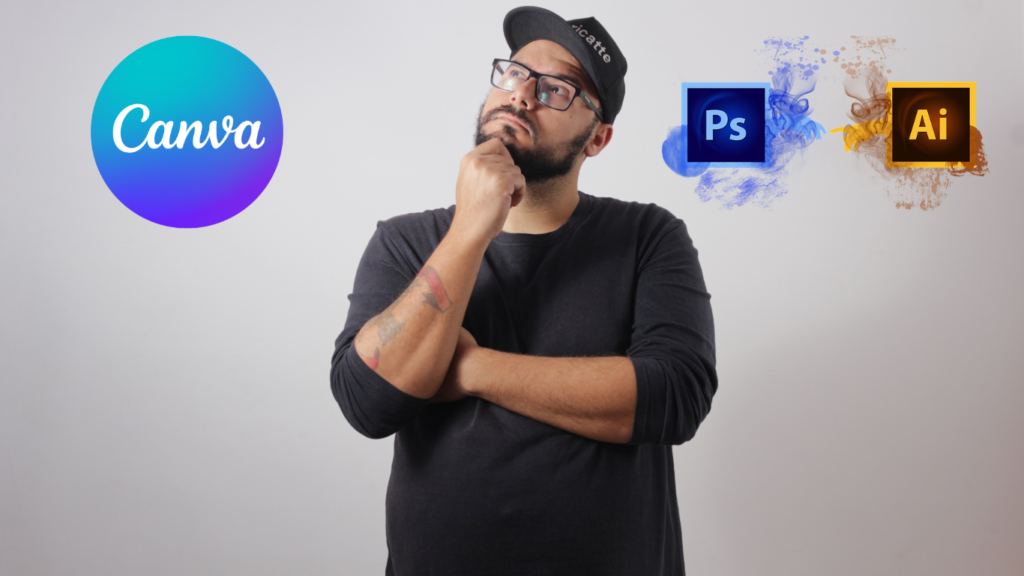
First of all, I am not a “real” designer. Now, that’s out of the way. Let’s dive into the (tiring) never-ending debate in tech and design circles about whether or not designing in Canva should be considered “real” graphic design. Recently, I’ve seen a number of experienced designers give the platform some bad rap, often claiming that you can’t truly call yourself a serious designer if you’re using Canva. In case you’re wondering what Canva is, in short, it’s graphic design for dummies. OK, that might not sound kind (even though there is a book with the title now), but I hope you get the drift. Canva is a free-to-use online tool designed to help users create social media posts, presentations, posters, videos, logos, and more. With its user-friendly interface, pre-made templates, and drag-and-drop functionality, Canva has earned its spot as a go-to platform for many beginners and non-designers wanting to tackle some graphic design project. Think flyers for a cake sale, community event or banners for social media pages. Canva’s versatility, simplicity, and accessibility have allowed it to gain popularity, especially with the explosion of social media content creation over the past decade. With nearly 200 million users now and a $2 billion revenue realisation in 2023, Canva has not just proved to be useful, but also profitable as many more users (including me) are willing to pay to access their premium features. Personally, I discovered Canva in 2015 and haven’t looked back since. It’s one tool, apart from my domain and web hosting, I have (almost) religiously paid for since 2020. At the time when I started using it some 9 years ago, I even created a short video tutorial on my (old) YouTube channel. I said “Old” OK? So as you watch it, just remember that Canva has evolved so much since – and so have I. I love it for both us. And who knows, I might just make a return to YouTube. Anyway, prior to using Canva, I remember trying to learn Photoshop and it just wasn’t my ministry and calling. I also tried to use another free open source Photoshop alternative called Gimp and it used to give me constant headaches as I would end up spending more time figuring out the tool because it was so complicated and not necessarily designing anything. Why Has Canva Gained Such Popularity? I think my simple answer to this would be: It really is that easy to use! It has empowered many creatives from small business owners to social media managers to bloggers like me. Many people can now achieve professional-looking results without needing a course in design or needing to master any complex software. Canva has democratised design, allowing anyone with an internet connection to put together simple, polished visuals in minutes. From beautifully designed Instagram posts to compelling presentations, the platform offers an impressive range of templates, design elements and stock assets to choose from. People are even designing e-books using Canva and some are making good money from selling these digital products. If you see me selling an e-book here (yes, it’s coming), don’t even bother asking, I would have designed it in Canva. For the average user (I think I fall in this category), Canva is revolutionary. For me it has simplified the design process and given me the confidence to experiment with some of my creative ideas. And in an age where content creation and branding are essential for personal and business success, Canva fills a major need. It saves time, eliminates the learning curve associated with traditional graphic design tools, and, most importantly, when done right, it offers high-quality results. Earlier this year I wanted to see how some t-shirt design I had done would come out and guess where I went? It’s as if I can just imagine something now and Canva will do it. But here’s where the debate really heats up: Can a designer truly call themselves a “professional” if they’re using Canva? Or is the platform a shortcut to a more legitimate, well-rounded skill set? The Divide: Canva vs. Photoshop and The Others When we talk about traditional graphic design tools like Photoshop, Illustrator, and InDesign, the contrast couldn’t be clearer. These programs are designed for professional, high-level design work, and they come with steep learning curves that can take years to master. They’re equipped with a wide range of advanced features that allow designers to craft highly customised designs which include photo manipulation, vector illustrations, and fully custom typography. These tools are designed for people who know exactly what they’re doing, and the results reflect the expertise and time invested in creating them. I have so much respect for graphic designers out there who have mastered any of these tools especially because I have been there, I have tried learning them and the only thing I came out with was an incredibly dizzy head. So, where does that leave Canva? Canva, by its very nature, is a simplified version of design. By doing away with much of the complexity and giving users pre-built templates and easy-to-use features, it has eliminated the need for the detailed customisation that traditional design software requires. For example, you won’t find the same degree of control over colours, typography, or image manipulation in Canva that you can achieve in Photoshop. Canva is built for speed, convenience, and efficiency – not for crafting complex, bespoke visual masterpieces. So does that mean that designers who use Canva aren’t “real” designers? Absolutely not. The Case for Canva in the age of Modern Design While it’s true that Canva lacks the flexibility and depth of traditional tools, it’s important to recognise that the world of design has changed. With the rise of social media and digital content marketing, speed and convenience have become just as important as high-level technical skills. When I think about the time I used to spend just trying to figure out Photoshop or Gimp back when I was starting out

Do ‘Real’ Designers Use Canva? Read More »

Beyond the Laptop on the Beach

When I first imagined the idea of working remotely back in August 2013, one of my biggest motivators was the chance to travel. Being tied to my desk felt like I was serving time in a prison. When I did take time off, those trips were always too short and packed with anxiety thinking, “This will end too soon.” I envisioned a life where I didn’t have to choose between vacation and work, where I could do both. It didn’t help that every remote work photo, post, or article I encountered usually featured someone with their laptop by the beach. I’ll dive into how misleading that can be later. Tsk tsk. Back then, every time I talked about working remotely, I made sure to emphasise my desire for the flexibility to travel (first and foremost) and spend time with my family. I’m grateful that I was able to realise this without worrying about whether I could make it back in time for work. While I wouldn’t call myself a travel junkie, I ceased the opportunities to explore that came my way without work being a barrier. The only real questions became: Is there internet connectivity? Do I have the funds to get there? So, yes I have worked in airports, and whilst at holiday resorts. I have never opened my laptop by the beach though 🤭 Fast forward to after I had my son, travel quickly faded as my main motivation for wanting to work remotely. The flexibility to show up for him whenever he needed me became my top priority. I love being able to flexibly plan out certain parts of my day (especially mornings) and take meetings from anywhere, without anyone questioning why I’m not sitting at my desk. Not having to drive through the horrendous traffic in Harare is another huge perk. I absolutely loathe sitting in traffic for long stretches. If you were to ask me today what my number one reason for wanting to work remotely is, I would definitely tell you it’s the flexibility it provides – especially around the aspects of my life that matter most: my family, my social life (my friends would probably laugh at this because, yeah😅), hobbies like writing this blog, and attending mid-week church meetings or other social events. If you asked me whether the flexibility to travel is still a perk, I’d probably say yes, though it’s no longer a priority for me. I don’t know if it’s because I discovered that traveling with a toddler is no walk in the park – especially with a toddler on the spectrum! The planning and emotional preparation involved is no small feat. In my 20s, when it was just me (single like a pringle😂) and living with my parents, travel was all I could think about. My travel bucket list was (and still is) long. There were only two rules: God willing AND funds permitting! I cherish those experiences I managed to have, and I know I’ll still want to travel from time to time. It’s just not my top priority right now. My son’s stability has become my top reason. It’s crucial to me that he feels comfortable, which means minimising disruptions to his routine and ultimately, our lives. Would he want to travel? I think so. The last time we were on a plane together, he pleasantly surprised me with his behaviour and, I could tell he really enjoyed that ride. I can’t say the same for when we landed, though. The sprinting I had to do at the airport before I got his stroller was amusing to everyone but me! Most of the remote work photos we see online feature someone on a beach or in a café with their laptop and latte, (often seemingly) thriving in that location-independent lifestyle. Many also showcase passport and boarding pass shots with captions like “catching flights, not feelings.” Let’s be real: there’s a level of pressure that such content creates, especially in today’s social media age of influencers and influencees (Yeah, just made that up!). I’ve experienced both sides – being pressured and being the one applying that pressure (intentionally or not). Now, if you’re considering a pivot to remote work and feeling “pressure” from online content suggesting you must travel and see the world, I’m here to tell you to relax. You don’t know if what’s portrayed in those photos was funded by remote work income. You might be comparing your experiences to trips paid for by someone else – a spouse, sibling, parent or friend. Personally, I’ve been on trips that were partly or fully funded by family or friends. Bless them all! It would be misleading for me to claim that every passport stamp I’ve collected came solely from my hard-earned remote work income. So, try to avoid the temptation to chase a lifestyle because of someone else’s highlight reel. Want something and spend money on it because it is meaningful and purposeful to you. Sit down with yourself and think about what truly matters to you in this season of your life. Be honest about what brings you authentic peace and joy. And if it’s travel, it’s OK. If it’s so that you can volunteer in your local area when you need to, it’s OK. If it’s so that you can take 1-hour long naps during your lunch breaks, it’s OK. If it’s so that you can spend the day in comfy clothes that feel like a hug, it’s absolutely OK too! It’s also OK for your reasons to change from time to time. Sometimes the seasons of life will require that we adapt accordingly. Just remember, your authentic reason for wanting to work remotely will carry you through the highs and lows of the journey. Beyond potential earnings, what else matters? Because, let’s be honest, sometimes money won’t come, sometimes money will come but won’t be enough, sometimes you’ll be let go, and you don’t want to fall apart and quit too soon

Beyond the Laptop on the Beach Read More »

What If? Imagining Life Without Fear

Sometime last week, I put this title in my drafts because it is something that kept coming to my mind. How many times do you decide you want to do something and then chicken out because you’re afraid of the outcome? How many times have you seen someone pursue an idea you once had and thought, “That’s exactly what I wanted to do when I thought about this idea in 2016!”? The aftermath often becomes a spiralling cycle of shoulda-woulda-couldas. For me, this has happened countless times. I have an idea, but fear holds me back. I start doubting its potential: Maybe this idea is only good in my head. Maybe it will fail to take off. Maybe my family might think I’m crazy. Maybe I won’t be as good as [insert competition]. I find ways to disqualify myself from the game before even playing, and I know I’m not alone in this. Fear is “an unpleasant emotion caused by the threat of danger, pain, or harm.” In the case of my ideas, which aren’t in any way dangerous or harmful, I’m really trying to avoid the potential pain (a.k.a. heartbreak) that comes from something not working out. Nobody likes to feel unpleasant emotions. This got me thinking: what exactly is the issue? Where does this threat come from? Why do some people boldly take action while others leave dreams as dreams? It’s widely accepted that positive outcomes are not always guaranteed. I concluded that my desire for control, over the outcome rather than the ideation and execution of an idea, plays a significant role in my hesitation. Imagine this: If we could control the outcome, the number of ideas brought to life would skyrocket. For example, if I wanted to set up a hair salon in my rural village in Guruve, and I could guarantee a return on investment of at least 15%, I would dive in with full confidence. Having that guarantee provides a sense of control over the outcome, right? But is there really a guarantee? There isn’t. Until an idea goes to market, it’s impossible to ensure any outcome. Take the aviation industry: to predict that a journey from Harare to Johannesburg could take approximately 1 hour and 45 minutes, there was a pioneer who first launched that flight years ago. They didn’t just put the plane in the sky; they researched, planned, and took calculated risks. I can’t just go to Guruve Centre and open a hair salon. I need to understand the potential market demographic, average disposable incomes of men and women in the area, present competition and understand if this is something that the community would want. Factors like religion and social norms could even influence how women would decide around this. But even with all this information, the only way I can know how they would receive the new service in the area is if I launch it and give them an opportunity to try it out. We didn’t know we needed an iPod until Apple launched one in 2001. Imagine if we had been stuck with those (now seemingly ridiculous) Sony Walkmans? Remember my favourite quote from I-Don’t-Know-Where which I last shared in my previous post? You don’t know what we don’t know. Imagine if Steve Jobs had been afraid? Imagine if Mark Zuckerberg had refused to talk to investors to grow Facebook? Imagine if he would have just pressed Ctrl + A + Delete on his code because he was afraid he wouldn’t succeed? So, now, when I think of this again and ask myself, what would I do if I wasn’t afraid? My answer: I would take those leaps. I would let go of my desire to want to control outcomes 100%. I would embrace uncertainty even when it had the potential to ignite unpleasant emotions within me. I would allow myself to experiment and learn from my failures. I would reach out to others with similar dreams and collaborate. I would support others on a similar journey whist also learning from them. Most importantly, I would accept that fear is a natural part of growth, not a barrier. The next time fear whispers doubts in my ear, I’ll remind myself that the greatest stories often come from taking risks. Instead of letting fear dictate my decisions, I’ll challenge myself to act. Because what if the outcomes could lead to amazing journeys? What if, instead of “what if I fail?” the question becomes “what if I soar?” There is a motivational speaker and coach I worked with many years ago who always used to say that some of you are not even afraid of failure; that you are actually afraid of the possibility of things working out. “Ko zvikaita?” she would say (Translation: What if it works out?). Seriously, after putting in all the work you need to, what if it works out? What if you succeed? I believe that’s a narrative worth pursuing. Note to self: Remember the key “word”: Put in the work that’s required of you. Feel the fear and do it anyway!

What If? Imagining Life Without Fear Read More »

The Power of Boldly and Courageously Showing Up

Last weekend I had the opportunity to speak at an event where I was sharing on my journey working remotely and insights on landing remote work opportunities. But I almost didn’t make it there. The event was in town at one of the tallest buildings in the heart of Harare. As luck would have it, when I got to the building reception to get to the elevator, the security guard was quick to tell me that I needed to take the stairs as the elevator had malfunctioned. There was one problem. Just one. The event was on the 13th floor! I remember thinking: It’s not too late to call and say I have fallen sick 🙈 Because who was going to climb 13 flights of stairs for me? 😂 But I couldn’t do that. The host, in ways she possibly cannot comprehend and value, showed up for me more than once. Deep down, I really wanted to do this for her – even if it meant climbing one of the Kilimanjaros of the Harare jungle. So I soldiered on to the top texting my friends in between to tell them how much I was suffering, and resting after every 2 to 3 steps along the way. I remember thinking again: This is why I prefer to work remotely. Imagine coming to work and the elevators have packed and you have to climb 20 floors up to get to your office? Nah, you can miss me with that fam! Because by the time I get to the 20th floor, I’m ready to go back home 😒 As I was climbing the stairs, I could also hear voices of others who were higher up panting, giggling and complaining too. I actually envied them because I thought, at least they were closer to the destination. Eventually, I finally got to the 13th floor! The joy of seeing the other attendees in the room who had also taken the same path as we laughed at each other for the brutal climb we had just experienced – surprisingly energising. I quickly forgot about the pain of that climb as I tried to get to know other attendees who were in the room whilst also catching my breath and drinking some water. As the event kicked off, every single minute I spent thereafter made every single step I had taken to get there worth it. I truly believe in this statement: We don’t know what we don’t know 🤷‍♀️. I absolutely enjoyed the insights and stories shared by my fellow guest speakers and I wouldn’t have expected to leave with the kind of knowledge I left with. The thing is, sometimes as we go about our lives, and I will use my country as an example, it’s easy to rest and find comfort on the “Zimbabwe is so hard” narrative. I am guilty of always complaining about how things sometimes really get so crazy here and Zimbabweans just never catch a break. The same way I was complaining as i was climbing those stairs to get to the event. The truth is, things do get hard here, sometimes in the most unbelievable ways, but at the end of the day, how do some people find the tenacity to just keep going? Right? Every single story I got to hear from fellow guest speakers was a reminder of how we need to allow ourselves to not only dream, but to show up for our dreams – boldly and courageously – even through the challenging times. It’s easy to be intimidated by other people who try to dampen our ambitions and aspirations. I believe it’s even easier to be intimidated by your presented circumstances. Thinking about your next meal or your next ZESA electricity token can cloud your judgment and make your vision seemingly impossible to achieve. In my case, 13 flights of stairs almost prevented me from showing up to an event I had been looking forward to for nearly a month. One of the speakers even spoke on this as well because, realising the journey she had to take with the stairs, she ended up having to change from her high heels into some flat strap shoes which were more appropriate for the climb. And indeed she also made it to the top panting but filled with energy to still deliver a powerful presentation. Since leaving this event, I have been thinking about how I am showing up for the big assignments and for the small ones. Am I showing up half heartedly ready to give up at the slightest inconvenience? Am I showing up with bravery for those assignments where I don’t even know where to begin getting started with them or am I lamenting at how impossible it’s going to be because of the million reasons I have made up in my head that are mostly not true? In the end, what I took away from that experience (and what I hope you can too) is the undeniable power of showing up boldly and courageously. Life will throw obstacles our way, whether they’re 13 flights of stairs or the daily challenges we face in our own lives. But it’s in those moments of struggle that we discover our true strength especially as we remember why we do what we do. Each step, no matter how painful, brings us closer to our goals and opens doors to opportunities we never anticipated. Just don’t remain in the same place. So the next time you’re faced with a daunting climb, whether literal or metaphorical, remember that every step counts. Embrace the discomfort, lean into the journey (I’m currently listening to the Lean In audiobook by the way😉), and show up for yourself and your dreams. Because at the end of the day, it’s not just about reaching the destination; it’s about who you become along the way. Let’s keep pushing forward, showing up with courage, and turning our dreams into reality. Remember to celebrate with those

The Power of Boldly and Courageously Showing Up Read More »

I went to London – what a delightful surprise!

On this day, last year, I was in London for our flagship event, the STRETCH Conference. We have been hosting it every year during Black History Month in the UK for the past 8 years. I had gone into 2023 really wanting to meet up in person with some of my colleagues who I had been working with remotely for over 2 years at this point. As much as I was excited, I (honestly) did not expect to like London PLUS my anxiety was at an all time high. Why? Was it my first time on a plane? No. Was it my first time travelling to a new place alone? No. Was it my first time travelling to a faraway place and leaving my son? Yes! Maybe THAT was the problem! I also think it was the fact that every time I have travelled to anywhere, I have stayed with friends or family who I have known all my life. But here I was going to be meeting with my colleagues in person for the first time and I did not know what to expect. It made me a bit uneasy. I work 100% remotely and don’t really get to meet people in person for anything in professional settings. It has gotten worse since I had my son because it now almost seems like my life just revolves around being in front of my laptop, running errands, school run, visiting my mum and doing church during the weekends. Let me just say being a professional hermit is not the desired state (for me) and I’m working on improving in this area. Anyway, straight off the bat I’m going to tell you though, London pleasantly surprised me. I loved my experience there last October and I don’t know whether it was London itself, the people I got to experience it with, our host or all of the above. Being part of the team on the ground that was planning and executing the STRETCH Conference event was such an honour. I enjoyed every minute of it! We met our other former colleagues and friends and having them carve out time to travel and catch up over brunches and lunches was just wholesome. By the way, the London food scene is GREAT! I had the best jollof rice meal to date and even as I type this right now, I remember how it was being prepared and the aroma. My goodness! I usually don’t go crazy over food when I travel but listen, even the Nando’s there hits different! Nando’s Zimbabwe is just annoying me at this point – I don’t even eat it anymore. The public transit system in London? 10/10! I love it so much because it makes it so easy for visitors to move around. I don’t like having to 100% depend on locals or Uber for mobility when I travel. This may sound weird but it actually makes me homesick. This reminds me of something my dad told me when I was getting on a plane for the first time some 10+ years ago. I was going to Dubai to visit my sister. I don’t know whether he could tell I was anxious but he said, “As long as you can read, you’re going to be fine”. And that’s been my approach to traveling to new places since. As long as it is written in English, I will figure it out. But even though I can read well I did have moments in London of running after trains and missing them by half a second or worse, just ending up on the wrong platform. Exhilarating if you ask me! 😅 Now to add icing to my first ever London experience, I had close family fly and drive in from different parts of the UK to see me just for a few hours. I mean, what do you do with that kind of love and showing up whilst in a new city? Even typing this makes me miss them more. Long distance cousin-ships and sibling-ships suck, honestly! So what is it about meeting in person? You all know I am such an advocate for remote work. I believe the flexibility it affords professionals just adds to a healthy and more balanced working experience. Over the years, I have tried to go remote even with my networking – joining communities that resonate with my professional aspirations. I have connected with amazing people along the way with whom I have exchanged products and services with. I have even partnered with others on projects without ever meeting in person. You can never convince me that remote work is not a viable way to grow teams and support business operations. My experience over the past 10 years says otherwise. But there is something about meeting in person that just brings a whole other dimension to relationships. “Oh you’re so tall!” “My goodness, you are so short!” Those were some of the hilarious first impressions we shared as we saw each other for the first time behind our screens. Whether we like it or not, perceptions are usually created as we hide behind the Teams, Zoom and Google Meet profile pictures and silhouettes. Sometimes we read chats and messages in voices and tones not intended by the sender. Some of y’all even play voicenotes at 1.5x or 2x speed to get through the message quickly which completely alters someone’s tone 😂 I’m laughing because I do that and it gets on my mum’s last nerve. So if you are like me and you fancy working remotely because you prefer to keep to yourself and the idea of socialising sometimes makes you cringe, please allow me to change your mind? Allow the conversations to leave the screens and keyboards. Be open to having them over cups of coffee and rich delicious slices of chocolate cake. (Sidebar: The way I have been thinking about chocolate cake lately is just nuts – my birthday is in 2

I went to London – what a delightful surprise! Read More »

“Life rewards you for the portion you fight for”

This quote was shared by a dear friend of mine a few years ago. It was something her sister, who was our age mate, had said to her before she passed on. It spoke to me and touched me deeply. I reached out to my friend and asked if I could create a graphic to share the quote and credit her sister. She agreed, and it has remained on my IG timeline ever since. I often think about this: Life rewards you for the portion you fight for. It forces me to examine my life – what I’m prioritising and the outcomes I’m achieving. We often complain about different aspects of our lives not working out – work, parenting, marriage, friendships, businesses. But what are we really pouring into those areas? A few stories for you around this… After giving birth to my son, I wanted to lose weight. But that was all there was to it: I was simply WANTING IT. Was I exercising? No. Did I adjust my diet? No. Doughnuts and fried chicken were “life”. Yet, I felt sad about being three sizes up from my usual. I wasn’t doing anything to achieve the outcome I desired. Over the past year or two though, I’ve finally managed to shed a few kilos. I try to walk more, and I hope to be running again soon (yes, I used to run 5K “easily”!). My portions have gotten smaller and I try to avoid junk food, though that latter part has been a real fight for my life. I love love love potato crisps! I’ve talked to several friends and acquaintances who are interested in working remotely. When I ask what they’re doing every day to get closer to their first, second, or third client? Crickets. “Build it and they will come”, right? Wrong! Like any business, you have to work every single day to get the attention of your intended clients. If there’s a probability that out of every 100 people you sell yourself to, one will buy, then for the 100 items or service slots you have, you should aim to sell them to at least…10,000! If you only manage to sell to 100, it would be overly ambitious to expect your items to sell out – almost unrealistic. I’ve shared about my son being diagnosed with autism. He is classified as non-verbal, which means he cannot communicate using spoken language. However, as we learn to navigate the challenges of his condition we have found other ways to encourage communication, even without words. Hours upon hours of speech and occupational therapy have also helped him improve things like eye contact and following instructions – both of which are a huge part of communication. Just yesterday, he wanted to go outside with me and came running to the door. I told him, “Go get your shoes,” and he quickly ran to the room to get them. It’s little things like this that remind me how far we’ve come on this journey. Yet, on some days, I do feel like we’re not making any progress. Why, you might ask? Well, individuals on the spectrum thrive on routine, and when they fall off that routine, it’s incredibly hard to get them back on track. These routines encompass their basic life activities like eating, going to school, bathing, brushing teeth, potty training, tidying up, and even sleeping! My son doesn’t even like us changing the direction we take when going to or coming from school. And it’s not like he will say, “Oh mummy, I don’t want to take this route.” He will throw a tantrum loud enough for bystanders to think I’m trying to kidnap him because he can’t use his words. So as I think about where my son is now and where I hope he’ll be in the near future, I realise that I can’t take his routines lightly. I can’t afford regression in the important and basic things. I need to be increasingly intentional about his life. As much as I believe God is ultimately in control, I know I must do what I can while I still can. The rest I surrender to God, because He is my son’s Maker, knows what he needs and gives it to him on time. His will takes precedence over mine. It’s my birthday this month, and I’ve been thinking: if I could be granted one wish, even for just a day, it would be to have a conversation with my son. I’d love to know what he’s thinking, how he’s feeling, what he thinks of me, whether he likes my cooking. I just want to know. When he came into this world just over four years ago, I never imagined that I would be wishing for these things at this point in his life. I recently looked at old videos of him before he turned one; how he could say “thank you” and clap his hands upon instruction. But that all went away. That’s autistic regression for you – a loss of previously acquired skills or a backtracking of developmental milestones. A few months ago, my son was reading more than 50 random words – mostly animals – but today, he doesn’t. I’m honestly not sure whether he can’t anymore or just doesn’t want. Sometimes it feels like someone switched my child and gave me another or pressed RESET on his brain, but that’s regression. For basic life skills regression can set you back weeks or even months! Routines are crucial in ensuring he masters the skills so that he can eventually do them independently. This year, my son finally started feeding himself. Although it’s still incredibly messy on most days, I’m glad he doesn’t just sit there expecting someone else to feed him all the time. Of course, there are days when he doesn’t want to lift a finger, but there’s definitely progress in the right direction. Thank God! Today, I feel like I’m fighting the fight

“Life rewards you for the portion you fight for” Read More »

Revive Your Tech Skills: Useful Tips from Learning Language and Coding

Last year my sister went to visit her (our) friend and sister in Germany. Our friend has lived in Germany for more than 20 years now and speaks fluent German. However, whilst my sister was there, she had to speak mostly English and Shona. My sister said that as they were about to leave, our friend said that she would need to exercise her German tongue again because she hadn’t used it much recently. I was baffled because I thought to myself, but isn’t it a skill that just sticks and kicks in when it needs to? I have another friend who spent about 2 years in a leadership program and working in Germany. She had to learn to speak German before even getting there. Almost ten years later, she admits that her German is no longer that good and it’s mainly due to the fact that she hardly speaks it any more. I also have a friend who is currently learning French while living in Zimbabwe. Her stories about her learning experience always leave me in stitches 😂 She’s shared how missing just one lesson or not reviewing her materials can set her back significantly. However, she’s found comfort in practicing her writing through her job and watching French TV content, which helps her stay engaged with the language. There are times that even I tire speaking English and as we say this side of the world, the English bundle would have depleted. Sometimes whilst speaking to non-Shona speaking colleagues, I just find myself “accidentally” throwing in Shona expressions like “Handiti?” (Translation: Isn’t it?) or “Hanzi” (Translation: He/She/They said) whilst trying to drive a point across. I am sure if you don’t understand Shona, you are just left wondering, “What was that?”, right? This made me reflect on the power of consistent practice. I thought about getting back into my Python learning and nearly had a mini-panic attack realising I barely remember what I learned at the beginning of last year. I hadn’t actually tried any exercises yet, so I was worried it might all seem new. But that’s not entirely true, is it? Usually, it is not that we have entirely forgotten a skill. I think that the skill will now exist in a part of our brain where, if some effort is applied in recaling it, it would come back to us. More like trying to ride a rusty see-saw that has been lying idle for years. It’s going to be rough or almost impossible at first. However, with a little bit of oiling of the moving parts, you’ll be back in full swing. Tech skills are not any different. We can actually learn and get to fully understand them, and then spend years without revisiting them. When the subject is brought before us again, it may seem like we have forgotten how to write an SQL script, for example. But once you start working on a project, it all slowly starts coming back to you. This was definitely the case for me as I revisited some concepts over the past 3 weeks in my postgrad programme which I first learnt some 14 to 18 years ago. Of course you may find yourself on sites like W3Schools and Stack Overflow every now and again, but you will realise that the core concepts are familiar and all you needed to do was to put them into practice. I certainly hope that will be the case for me when I do revisit Python again. In case you are wondering, why Python? What is Python? Do I have a snake? 😂 Python is a programming language that is used in web development, data science, AI and automation. Some of the popular services that use Python include Amazon, Facebook and Google. The founder of the Python programming Language, Guido van Rossum, actually worked for Google between 2005 and 2012 developing the language. which is used as one of the server-side languages chosen for its readability and ease of maintenance. So here’s my advice if you’re building a tech skill: Don’t stop practicing! Thanks to my friend and coach, Thembe, who introduced me, I am now such a James Clear fan and his best-seller book, Atomic Habits. It’s from him I learnt that, according to a UCL study, it takes on average anywhere between 18 and 254 days for a person to form a new habit. That’s why I think that the 100-Day Python Challenge I never finished was sufficient to at least lead me to that point where I would actually be able to form a habit. And you don’t need to dedicate that much time in a day. Some challenges in my 100-Day challenge took under an hour. However others actually took me a couple of days to figure out. But who is giving who pressure? Nobody right? So establish your pace and find a learning rhythm that works for you. Before you know it, you would have gained a skill that you can add to your resume or apply as part of a new project, freelancing or volunteering opportunity. Here’s A Learning Challenge! Remember, no experience is wasted. If you have some free time, try learning a new skill over the next 30 days – whether it’s Excel, Canva, Project Management, or anything else. When you’re done, let me know because we’re definitely going to celebrate! 😉

Revive Your Tech Skills: Useful Tips from Learning Language and Coding Read More »